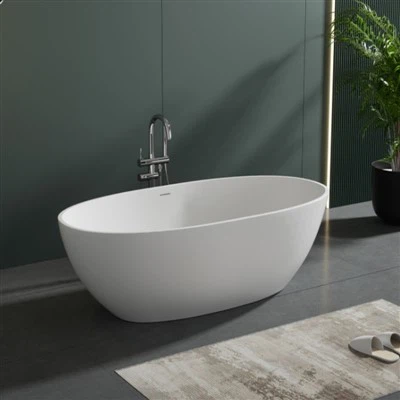
Hey there! As a supplier of Concrete Tubs, I often get asked some pretty interesting questions. One that's been coming up a lot lately is, "Can a concrete tub be used as a wine barrel?" Let's dive into this topic and see what's what.
First off, let's talk a bit about concrete tubs. We offer all sorts of cool options, like the Concrete Soaking Tub and the Concrete Tub. They're sturdy, stylish, and can be used in a bunch of different ways. And if you're into a more natural look, we also have the Freestanding Stone Bathtub.
Now, back to the main question: using a concrete tub as a wine barrel. Historically, wine barrels have been made from wood, usually oak. Wood has some unique properties that make it great for winemaking. It allows a tiny bit of oxygen to seep into the wine, which helps with the aging process. This slow oxidation can soften the tannins in the wine, making it smoother and more complex.
Concrete, on the other hand, is a very different material. It's much less porous than wood. That means it doesn't let oxygen in as easily. For some types of wines, this could be a good thing. If you're making a wine that you want to keep its fresh, fruity flavors, a concrete tub might be a great option. It can help preserve those bright notes and prevent the wine from oxidizing too quickly.
But there are also some challenges. One big issue is the potential for chemical reactions. Concrete is a mixture of cement, aggregates, and water. Some of the chemicals in the cement could react with the wine, especially if the concrete isn't properly sealed. This could change the taste and quality of the wine in a not-so-good way.
To use a concrete tub as a wine barrel, you'd need to make sure it's properly prepared. First, you'd have to seal the tub. There are special food-grade sealants available that can create a barrier between the concrete and the wine. This helps prevent any chemical reactions and keeps the wine safe to drink.
Another thing to consider is the shape of the tub. Traditional wine barrels are curved, which helps with the circulation of the wine. The yeast and sediment can settle more easily in a barrel-shaped container. Concrete tubs are usually more rectangular or square. This might affect the way the wine ferments and ages. You'd need to be extra careful about stirring the wine and making sure the yeast and sediment are evenly distributed.
In terms of temperature control, concrete has its pros and cons. It's a good insulator, which means it can help keep the wine at a more stable temperature. This is important for the fermentation process. But in some cases, it might be too good at insulating. If the ambient temperature changes, the concrete might take a long time to heat up or cool down, which could affect the fermentation.
Despite these challenges, there are some winemakers who are starting to experiment with concrete tubs. They see the potential for creating unique wines with a different flavor profile. And let's face it, a concrete tub can be a pretty cool addition to a winery. It gives the place a modern, industrial look.
If you're a winemaker thinking about trying out a concrete tub, I'd say go for it! But do your research first. Make sure you understand the potential risks and benefits. And if you have any questions, feel free to reach out. We're here to help you make the best decision for your winemaking process.
As a Concrete Tub supplier, we have a lot of experience with these products. We can help you choose the right size and style of tub for your needs. And we can also give you some tips on how to prepare it for winemaking.
So, if you're interested in using a concrete tub in your winery, whether it's for fermentation, aging, or just for storage, don't hesitate to contact us. We'd love to have a chat and discuss how we can work together. You can start the conversation about your specific requirements and let's see if our Concrete Tub or other related products are the right fit for your winemaking venture.
In conclusion, while using a concrete tub as a wine barrel isn't the traditional approach, it has some interesting possibilities. With the right preparation and care, it could open up new avenues for winemakers to create unique and delicious wines. Give it a thought and let's explore this exciting option together!


References
- "The Science of Winemaking" - A comprehensive book on the winemaking process and the role of different materials.
- Industry reports on alternative winemaking vessels and their impact on wine quality.