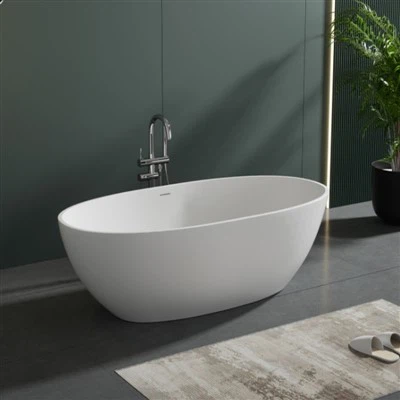
As a supplier of high - quality Concrete Tub, I often get asked the question: "Can a concrete tub crack easily?" This is a valid concern for anyone considering investing in a concrete tub for their bathroom. In this blog post, I'll delve into the factors that influence the cracking of concrete tubs and provide you with a comprehensive understanding of their durability.
Understanding the Nature of Concrete
Concrete is a composite material made up of cement, aggregates (such as sand and gravel), and water. When these components are mixed together, a chemical reaction called hydration occurs, which hardens the mixture into a solid mass. The strength and durability of concrete depend on several factors, including the quality of the materials used, the mix design, and the curing process.


Quality of Materials
The quality of the cement, aggregates, and water used in the concrete mix plays a crucial role in determining the strength and durability of the final product. High - quality cement with the right chemical composition will result in a stronger and more durable concrete. Similarly, well - graded aggregates with proper particle sizes will contribute to a denser and more stable concrete structure. Impurities in the water, such as high levels of salts or acids, can also affect the quality of the concrete and make it more prone to cracking.
Mix Design
The mix design of the concrete, which refers to the proportions of cement, aggregates, and water, is another important factor. A well - designed mix will have the right balance of these components to achieve the desired strength and workability. If the mix has too much water, the concrete will be weaker and more likely to shrink and crack as it dries. On the other hand, a mix with too little water may be difficult to work with and may not fully hydrate, also leading to a weaker structure.
Curing Process
The curing process is the period during which the concrete is kept moist and at the right temperature to allow the hydration reaction to complete. Proper curing is essential for the development of the full strength of the concrete. If the concrete dries out too quickly, it can develop surface cracks. Inadequate curing can also lead to internal stresses within the concrete, which can cause cracking over time.
Factors That Can Cause Concrete Tub Cracks
Installation Issues
One of the most common causes of cracking in concrete tubs is improper installation. If the tub is not installed on a level and stable surface, it can experience uneven stress distribution. For example, if the floor beneath the tub has a slight slope or if there are soft spots, the weight of the tub and the water it holds can cause it to shift and crack. Additionally, if the tub is not properly supported around its edges, it can flex and develop cracks.
Thermal Expansion and Contraction
Concrete expands and contracts with changes in temperature. In a bathroom environment, where the temperature can vary significantly between hot showers and cooler periods, these thermal movements can put stress on the concrete tub. If the tub is not designed to accommodate these movements, cracks can form. For instance, if the tub is installed in an area with poor insulation and is exposed to extreme temperature changes, the risk of cracking increases.
Chemical Attack
Certain chemicals can react with the components of concrete and cause damage. In a bathroom, cleaning agents, soaps, and even hard water deposits can potentially attack the concrete. For example, acidic cleaning products can dissolve the cement paste in the concrete, weakening its structure and making it more likely to crack.
Impact and Overloading
Concrete tubs are generally quite strong, but they are not indestructible. A significant impact, such as dropping a heavy object into the tub, can cause a crack. Overloading the tub with excessive weight, for example, by having multiple people in a small tub, can also put too much stress on the structure and lead to cracking.
How Our Concrete Tubs Are Designed to Resist Cracking
At our company, we take several measures to ensure that our Concrete Freestanding Tub and Concrete Soaking Tub are highly resistant to cracking.
High - Quality Materials
We use only the finest quality cement, aggregates, and water in our concrete mixes. Our cement is carefully selected for its high strength and durability, and our aggregates are well - graded to ensure a dense and stable structure. We also test the water used in the mix to ensure it is free from impurities that could affect the quality of the concrete.
Optimal Mix Design
Our experienced engineers have developed a proprietary mix design that is specifically tailored for our concrete tubs. This mix has the right balance of components to achieve maximum strength and workability while minimizing the risk of shrinkage and cracking. We also use additives in the mix to enhance the performance of the concrete, such as fibers that help to control cracking.
Precise Manufacturing and Installation Guidelines
During the manufacturing process, we pay close attention to every detail to ensure the quality of our tubs. Our tubs are cast in custom - made molds and are cured under controlled conditions to allow for proper hydration and strength development. We also provide detailed installation guidelines to our customers and our installation partners. These guidelines ensure that the tub is installed on a level and stable surface, with proper support around its edges, to minimize the risk of cracking due to installation issues.
Maintenance Tips to Prevent Cracking
Even with a well - designed and properly installed concrete tub, regular maintenance is important to prevent cracking.
Use Gentle Cleaning Products
Avoid using harsh or acidic cleaning agents on your concrete tub. Instead, use mild, pH - neutral cleaners that are specifically formulated for use on concrete surfaces. These cleaners will effectively remove dirt and stains without damaging the concrete.
Protect the Tub from Impact
Place a non - slip mat in the tub to prevent objects from dropping directly onto the surface. Also, be careful when moving objects in and around the tub to avoid accidental impacts.
Monitor Temperature and Humidity
Keep the bathroom well - ventilated to reduce humidity levels. This can help to prevent excessive moisture buildup, which can contribute to thermal stress and cracking. Additionally, if possible, maintain a relatively stable temperature in the bathroom to minimize thermal expansion and contraction.
Conclusion
In conclusion, while concrete tubs can crack under certain conditions, a well - made and properly installed Concrete Tub is highly resistant to cracking. By using high - quality materials, optimal mix designs, and following proper installation and maintenance practices, the risk of cracking can be significantly reduced.
If you are considering purchasing a concrete tub for your bathroom, we invite you to contact us for more information. Our team of experts can provide you with detailed product specifications, installation advice, and answer any questions you may have. We are committed to providing you with the highest quality concrete tubs that will enhance the beauty and functionality of your bathroom for years to come.
References
- Neville, A. M. (1995). Properties of Concrete. Pearson Education.
- Mindess, S., Young, J. F., & Darwin, D. (2003). Concrete, Microstructure, Properties, and Materials. Prentice Hall.
- ACI Committee 301. (2019). Specifications for Structural Concrete. American Concrete Institute.