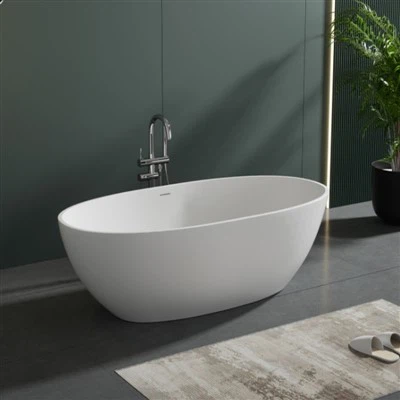
Hey there! As a supplier of concrete bathtubs, I often get asked, "Do concrete bathtubs require a specific type of plumbing?" Well, let's dive right into it and find out.
First off, let's talk a bit about concrete bathtubs. They're super cool and have become quite popular lately. You've got different types like the Concrete Tub, Concrete Freestanding Tub, and Concrete Soaking Tub. Each of these has its own charm and features, but when it comes to plumbing, there are some common things to consider.
Concrete bathtubs are heavy. Like, really heavy. This is the first thing that affects the plumbing. Because of their weight, you need to make sure that the plumbing system can support the load. The pipes and fittings need to be properly secured and installed to handle not just the weight of the tub itself but also the water it holds. A standard plumbing setup might not be enough. You'll likely need stronger pipes and more robust connections.
For the drain, it's crucial to have a good-sized one. Concrete bathtubs usually hold a decent amount of water, so a small drain can lead to slow drainage. A larger diameter drain pipe will help the water flow out quickly and prevent clogs. You might also want to consider a drain with a good trap. The trap is that curved part of the pipe under the tub. It helps keep sewer gases from coming back into the bathroom. A well - designed trap will do its job effectively without causing any drainage issues.
Now, let's talk about the water supply. Concrete bathtubs can have different faucet and spout configurations. Some might have a wall - mounted faucet, while others could have a freestanding one. Depending on the type of faucet, the plumbing for the water supply will vary. If it's a wall - mounted faucet, you'll need to run the water supply lines through the wall. This requires careful planning to make sure the lines are hidden and properly connected. For a freestanding faucet, the plumbing might be a bit more visible, but it still needs to be secure and leak - free.
Another thing to think about is the location of the bathtub. If it's a freestanding concrete tub, you have more flexibility in terms of where to place it. But this also means that the plumbing needs to be routed in a way that doesn't look messy. You might need to use flexible hoses to connect the tub to the main water supply and drain lines. These hoses should be of high - quality to prevent leaks and kinks.
When it comes to installation, it's really important to have a professional plumber do it. They know how to handle the unique requirements of concrete bathtubs. They can make sure that all the plumbing connections are tight, the pipes are properly sloped for drainage, and everything is up to code. A DIY job might seem tempting, but with the complexity of concrete bathtub plumbing, it's not worth the risk.
Let's take a closer look at some of the benefits of having the right plumbing for concrete bathtubs. First of all, it ensures a long - lasting and reliable bathtub. A well - plumbed tub will not leak, which can save you a lot of money on water damage repairs. It also provides a better bathing experience. Fast drainage means you don't have to wait around for the tub to empty, and a consistent water supply means a steady stream of water for a relaxing bath.
Now, I know this all might sound a bit complicated, but don't worry. We're here to help. As a concrete bathtub supplier, we've worked with many plumbers and know what works best. We can provide you with all the information you need about the plumbing requirements for our different types of concrete bathtubs. Whether you're a homeowner looking to upgrade your bathroom or a contractor working on a project, we've got your back.


If you're interested in our concrete bathtubs, we'd love to have a chat with you. We can discuss your specific needs, the plumbing options, and help you choose the perfect tub for your space. Contact us to start the conversation and let's make your dream bathroom a reality.
References
- "Plumbing for Bathtubs: A Comprehensive Guide". Plumbing Today Magazine.
- "Concrete Bathtub Installation Best Practices". Home Improvement Journal.