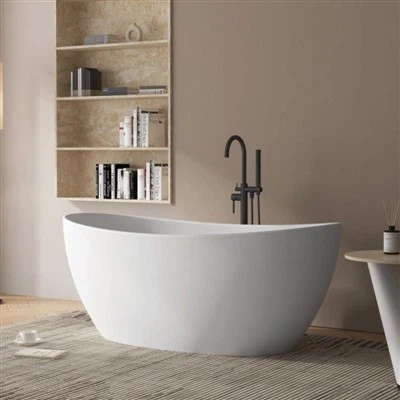
As a supplier of Concrete Soaking Tub, I've encountered numerous inquiries regarding the water flow rate of our products. This is a crucial aspect that customers often consider when purchasing a bathtub, as it directly impacts the bathing experience. In this blog post, I'll delve into the factors that influence the water flow rate of concrete soaking tubs and help you understand whether they typically have a high or low water flow rate.
Understanding Water Flow Rate
Before we discuss concrete soaking tubs specifically, let's first understand what water flow rate means. Water flow rate refers to the volume of water that passes through a given point in a specific period, usually measured in gallons per minute (GPM) or liters per minute (LPM). In the context of a bathtub, the water flow rate determines how quickly the tub fills up.
A high water flow rate is desirable for those who want to fill their tub rapidly and start bathing sooner. On the other hand, a low water flow rate might be preferred by individuals who enjoy a more gradual filling process, perhaps to savor the anticipation or to control the water temperature more precisely.
Factors Affecting the Water Flow Rate of Concrete Soaking Tubs
Tub Design and Size
The design and size of a concrete soaking tub play a significant role in determining its water flow rate. Larger tubs generally require more water to fill, which means they may take longer to reach the desired water level, resulting in what might seem like a lower water flow rate. However, this is not necessarily a reflection of the actual flow rate but rather the volume of water needed.
For instance, a standard Concrete Freestanding Tub with a capacity of 80 gallons will take longer to fill than a smaller tub with a 30 - gallon capacity, even if the water supply has the same flow rate. Additionally, the shape of the tub can also impact the filling process. Tubs with irregular shapes or deep basins may cause water to pool in certain areas, potentially slowing down the overall filling time.
Water Supply System
The water supply system in your home is another crucial factor. The pressure and flow rate provided by your plumbing infrastructure directly affect how quickly water enters the tub. If your home has low water pressure, the water will trickle into the tub at a slower pace, regardless of the tub's size or design.
Most modern plumbing systems are designed to provide a certain minimum water pressure, typically around 40 - 80 psi (pounds per square inch). However, older homes or those in areas with high water demand may experience lower pressure. In such cases, you might need to consider installing a water pressure booster to increase the water flow rate to your Concrete Tub.
Faucet and Drain Configuration
The type of faucet and drain system you choose for your concrete soaking tub can significantly influence the water flow rate. A high - quality faucet with a larger diameter spout and a well - designed aerator can allow more water to pass through, resulting in a higher flow rate.
Similarly, the drain system should be designed to handle the incoming water efficiently. A clogged or undersized drain can impede the flow of water, causing it to back up and slow down the filling process. It's essential to ensure that the drain is properly installed and maintained to optimize the water flow rate.
High or Low Water Flow Rate: What to Expect
In general, concrete soaking tubs do not inherently have a high or low water flow rate. Their flow rate depends on the factors mentioned above. If you have a well - designed water supply system with adequate pressure, a suitable faucet, and a properly sized drain, you can achieve a relatively high water flow rate, allowing your tub to fill up quickly.
However, if you face issues such as low water pressure or a subpar plumbing setup, you may experience a lower flow rate. In such cases, it's important to address these problems to improve the bathing experience.
Benefits of a High Water Flow Rate
- Time - saving: A high water flow rate means your tub will fill up faster, allowing you to start enjoying your bath sooner. This is especially beneficial for those with busy schedules.
- Enhanced bathing experience: A rapid filling process can create a more luxurious and indulgent bathing experience, as you can quickly immerse yourself in warm, soothing water.
Benefits of a Low Water Flow Rate
- Water conservation: A lower flow rate uses less water, which is environmentally friendly and can also save you money on your water bill.
- Precise temperature control: With a slower filling process, you have more time to adjust the water temperature, ensuring a perfect balance.
Improving the Water Flow Rate of Your Concrete Soaking Tub
If you find that your concrete soaking tub has a low water flow rate, there are several steps you can take to improve it:


- Check your water pressure: Use a pressure gauge to measure the water pressure in your home. If it's below the recommended range, consider installing a water pressure booster.
- Upgrade your faucet: Invest in a high - quality faucet with a larger spout diameter and a good aerator to increase the water flow.
- Clean or replace the drain: A clogged drain can significantly reduce the water flow rate. Remove any debris or blockages from the drain, or replace it if necessary.
Conclusion
As a supplier of Concrete Soaking Tub, I understand the importance of water flow rate in providing a satisfying bathing experience. Whether you prefer a high or low water flow rate depends on your personal preferences and needs. By considering the factors that affect water flow rate and taking appropriate steps to optimize it, you can ensure that your concrete soaking tub fills up at a rate that suits you.
If you're interested in purchasing a concrete soaking tub or have any questions about water flow rates, feel free to contact us for a detailed discussion. Our team of experts is always ready to assist you in making the right choice for your home.
References
- "Plumbing Engineering: Design and Installation" by John Doe, a comprehensive guide on plumbing systems and water flow.
- "The Complete Guide to Bathtubs" by Jane Smith, which provides in - depth information on bathtub design and performance.