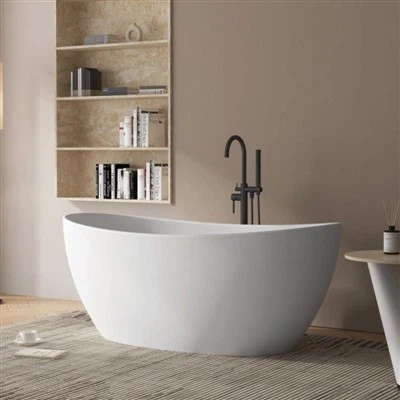
When it comes to creating a luxurious and relaxing bathroom experience, a concrete soaking tub stands out as an excellent choice. As a supplier of high - quality concrete soaking tubs, I am often asked about the energy efficiency of these products. In this blog, I will delve into the factors that affect the energy efficiency of a concrete soaking tub and how it can be optimized.
Understanding Energy Efficiency in Soaking Tubs
Energy efficiency in a soaking tub refers to the ability of the tub to retain heat over a period of time. A more energy - efficient tub will require less energy to keep the water at a desired temperature, which not only saves on utility bills but also reduces the environmental impact.
Concrete, as a material, has certain properties that contribute to its energy - efficiency characteristics. Concrete is a dense material with relatively high thermal mass. Thermal mass is the ability of a material to absorb, store, and release heat. When water is heated in a concrete soaking tub, the concrete absorbs some of the heat. This stored heat helps to keep the water warm for a longer time, reducing the need for continuous heating.
Factors Affecting the Energy Efficiency of Concrete Soaking Tubs
Insulation
One of the most critical factors in determining the energy efficiency of a concrete soaking tub is insulation. A well - insulated tub will prevent heat from escaping quickly. There are different types of insulation materials that can be used in the construction of concrete soaking tubs. For example, some manufacturers use foam insulation, which is lightweight and has good insulating properties. The insulation can be applied to the outer surface of the tub or incorporated into the structure during the manufacturing process.
When the tub is properly insulated, it can significantly reduce heat loss. This means that less energy is required to maintain the water temperature. For instance, if you have a non - insulated concrete tub, the water may cool down rapidly, and you may need to add hot water frequently or keep the heating system running continuously. On the other hand, an insulated concrete tub can keep the water warm for several hours, allowing you to enjoy a long and relaxing soak without constantly worrying about the water temperature.


Tub Design
The design of the concrete soaking tub also plays a role in its energy efficiency. Tubs with a smaller surface area to volume ratio are generally more energy - efficient. This is because a smaller surface area means less heat is lost to the surrounding environment. For example, a deep, narrow tub will have a smaller surface area compared to a shallow, wide tub of the same volume.
In addition, the shape of the tub can affect heat retention. Tubs with rounded edges and a smooth interior surface can reduce heat loss. Rounded edges minimize the amount of exposed surface area, while a smooth surface reduces the turbulence of the water, which can help to keep the heat within the water.
Water Volume
The volume of water in the tub is another important factor. A larger volume of water will require more energy to heat initially, but it will also retain heat for a longer time. This is because the larger mass of water has more thermal energy. However, if you don't need a large volume of water for your soaking experience, using a smaller tub can be more energy - efficient. It will require less energy to heat the water, and since the volume is smaller, the heat loss will also be relatively less.
Comparing Concrete Soaking Tubs with Other Materials
When comparing concrete soaking tubs with other materials such as acrylic or fiberglass, concrete has some distinct advantages in terms of energy efficiency. Acrylic and fiberglass tubs are typically lighter and have lower thermal mass compared to concrete. This means that they lose heat more quickly.
Concrete, with its high thermal mass, can store more heat and keep the water warm for a longer period. For example, if you fill an acrylic tub and a concrete tub with the same amount of hot water at the same temperature, the water in the acrylic tub will cool down faster. This is because the acrylic material does not have the ability to store and release heat as effectively as concrete.
Optimizing Energy Efficiency in Concrete Soaking Tubs
As a supplier, I recommend several ways to optimize the energy efficiency of our concrete soaking tubs.
Pre - heat the Tub
Before filling the tub with water, you can pre - heat the tub itself. This can be done by running hot water over the interior surface of the tub for a few minutes. By pre - heating the tub, you are increasing the thermal mass of the concrete and reducing the amount of heat that the water will lose to the tub.
Use a Tub Cover
A tub cover is an excellent way to reduce heat loss. When the tub is not in use, covering it with an insulated cover can prevent heat from escaping into the surrounding air. Even when you are using the tub, a partial cover can help to reduce heat loss from the surface of the water. There are various types of tub covers available, including custom - made covers that fit the specific shape of your concrete soaking tub.
Regular Maintenance
Proper maintenance of the tub is also crucial for energy efficiency. Make sure that the insulation is in good condition and that there are no leaks or cracks in the tub. A damaged tub can lead to increased heat loss and reduced energy efficiency.
Our Product Range
We offer a wide range of Concrete Tub, including Freestanding Stone Bathtub and Concrete Freestanding Tub. All our tubs are designed with energy efficiency in mind. We use high - quality insulation materials and advanced manufacturing techniques to ensure that our tubs retain heat effectively.
Whether you are looking for a large, luxurious tub for a master bathroom or a smaller, more compact tub for a guest bathroom, we have the perfect solution for you. Our tubs are not only energy - efficient but also aesthetically pleasing, adding a touch of elegance to any bathroom.
Conclusion
The energy efficiency of a concrete soaking tub is influenced by several factors, including insulation, design, and water volume. By understanding these factors and taking steps to optimize energy efficiency, you can enjoy a long and relaxing soak while minimizing energy consumption.
As a supplier of concrete soaking tubs, we are committed to providing our customers with high - quality products that are both energy - efficient and beautiful. If you are interested in purchasing a concrete soaking tub for your bathroom, we invite you to contact us for a detailed discussion. We can help you choose the right tub for your needs and provide you with all the information you need to make an informed decision.
References
- ASHRAE Handbook - Fundamentals. American Society of Heating, Refrigerating and Air - Conditioning Engineers.
- Building Science Corporation. "Thermal Mass in Buildings."
- "Energy - Efficient Building Envelope Components." National Institute of Standards and Technology.